American foreign policy is a confused jumble. This fact has been underscored by the recent US involvement in the Libyan civil war. The American role in fighting Libyan dictator Muammar Quaddafi through the enforcement of a no-fly zone has made me wonder what the goals of US foreign policy should be in regards to the “Arab Spring” now shaking the governments of the Middle East and North Africa. More disturbing is the increasing lack of American moral authority in these regions of the world, where we have propped up oppressive dictatorships and monarchies in order to ensure political stability and the flow of oil to the West. The brave opponents of these regimes will be hurt in the long run if the US doesn’t determine a consistent foreign policy that buttresses the ideals that are supposedly at the heart of American engagement in the world: democracy and human rights. If the US doesn’t consider these ideals important in foreign policy, than why say that they are? Why not embrace the “national interests” argument and be open about the need to keep Libyan oil flowing, no matter if it means sacrificing the possibilities presented by the Arab Spring?
It’s easy to see where American democratic rhetoric falls short on the ideals front. The situation in the West African nation Ivory Coast provides one example. Laurent Gbagbo, who became president in 2000, was defeated in an election held last November. The election was considered fair by international monitors, but Gbagbo decided to stay on. His security forces have used violence against citizens in the capital, Abidjan, resulting in hundreds of deaths. Alassane Outtara, who won the election, has been holed up in a hotel, protected by United Nations troops. The following quote from a New York Times article sums up the dire situation: “He [Gbagbo] has also brutally snuffed out dissent. One of the last peaceful, sustained expressions of public dissent in Abidjan — women protesting with branches symbolizing peace — was mowed down in volleys of machine-gun fire from Mr. Gbagbo’s security forces” (New York Times, online edition, March 23, 2011). Wouldn’t a no-fly zone have helped these heroic women resist this illegal regime? Or, has the US decided that national interests are more important than ideals?
In addition to the bloody situation in Ivory Coast, Saudi Arabia recently sent troops into Bahrain, a tiny island nation off the coast of the Arabian Peninsula. Bahrain’s Sunni monarchy has ignored the same anger and resentment that brought down dictators in Tunisia and Egypt. However, Bahrain is home to the American Fifth Fleet and is a banking center that also produces a respectable amount of oil. Thousands of Shiite protesters, calling for democratic reform, were brutally beaten and dispersed by security forces, with little protest from the United States. If our foreign policy goals in regards to Bahrain are to preserve American military bases there and to avoid embarrassing the Saudi monarchy in order to keep the oil flowing, then our policy has been a rousing success.
The simple point is this: if President Obama and Secretary of State Hillary Clinton have decided that American ideals of democracy and self-determination are at stake in Libya, then why do they not apply in Ivory Coast and Bahrain? If national interests (security, both physical and economic) are what really drives US foreign policy, do those people a favor who have decided to risk their lives resisting corrupt regimes in Libya, Tunisia and Egypt: level with them now about US intentions. Why give them hope if the Americans will be absent when they need the moral support to build a more humane, democratic world?
Wednesday, March 23, 2011


Wednesday, November 10, 2010
A Veteran Remembered
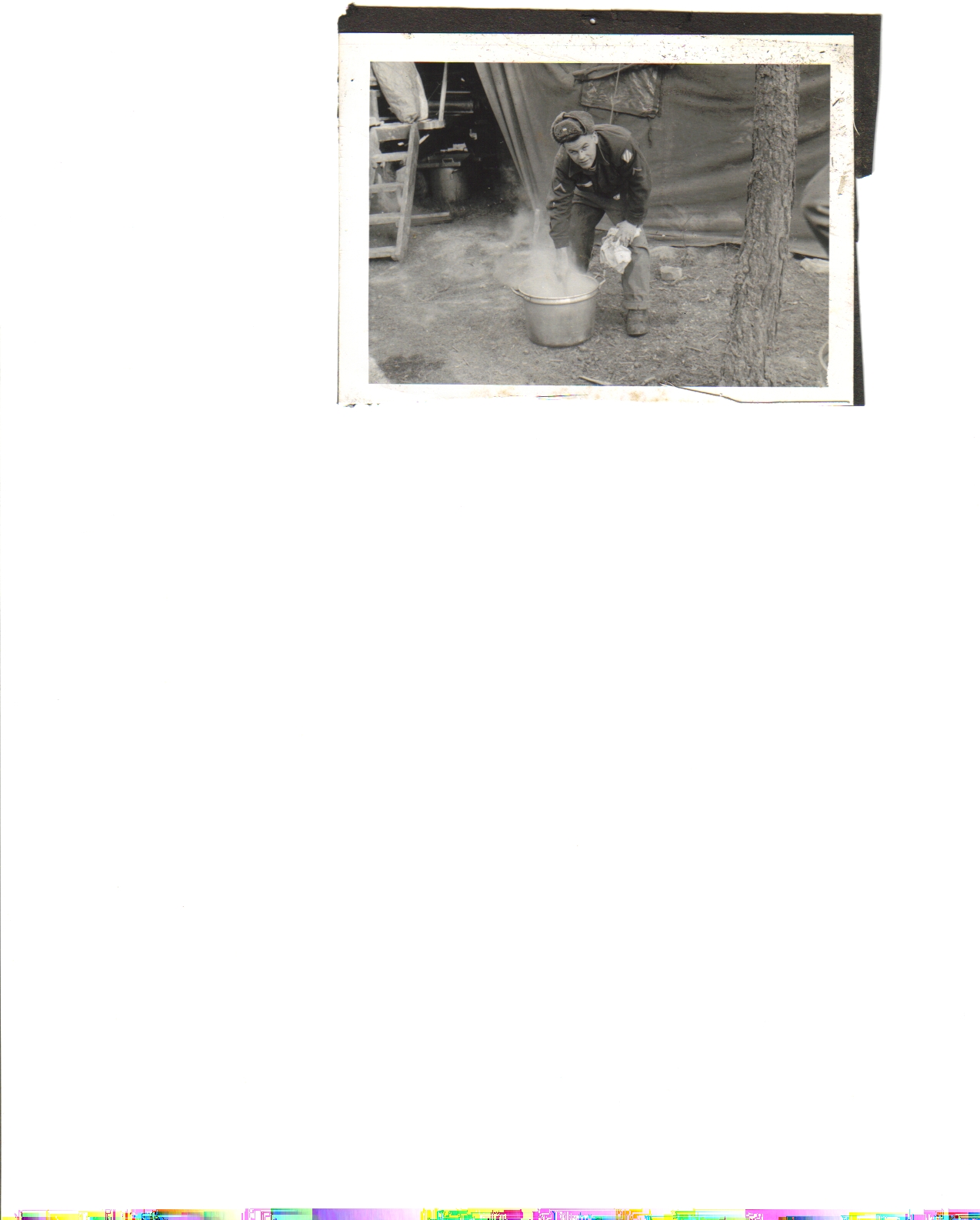
On October 10, 1957, a letter arrived for my father, Laurence M. Davis, then an eighteen-year-old from Everett, Massachusetts. The contents of that letter changed his life--it was an induction notice from the United States Army. He had been drafted. Soon thereafter, he arrived in Fort Benning, Georgia, to begin basic training. For a kid who had never travelled much, mostly to the summer home of his parents in Hampton Beach, New Hampshire, the heat, snakes and southern accents of his fellow soldiers were a far cry from his staid New England surroundings.
In his own recollection years later, his time in the army changed him into a man. His stories from that time were filled with a mixture of laughter, excitement and dread that mark the life of a soldier. He once told me that he was so homesick at Fort Benning that he often “cried into his pillow at night.” The challenge of being away from home was tempered by the many friendships he made during basic training. He met men from Appalachia who could not read; overweight men from privileged families who found boot camp hell on earth; and men who earned medals fighting in World War II and Korea. He attended cooks and bakers school and began a lifetime interest in cooking (although as a kid me and my brother were subjected to large quantities of spam and knockwurst, our own boot camp to muddle through).
Private Davis was part of the vaunted Third Division and he found himself in a mortar battery. He was stationed in West Germany during the “Berlin Conflict,” when the Soviets built the Berlin Wall and a war seemed a possibility at the time. He told me about the ways average Germans sought to escape from the East by climbing the barbed wire fence to the West or by pole-vaulting over it or digging tunnels under it. It was in West Germany that he met Elvis Presley and would insist to me that the King of Rock ‘n Roll was a dedicated soldier who received no special treatment (the army allowed Elvis to sing in the mess hall on Sunday mornings—quite a sight to see, my father mused quite often).
It was in the army, far from the discipline of my grandparents’ house, that he began to experience the freedom to make decisions for himself. He smoked and drank and raised hell, a common pastime for most soldiers. Once, on a weekend pass, he and two of his buddies decided to take in the local taverns and drink German beer. They bought lederhosen and tried to blend in with the locals. After quite a few stops, they found themselves in the middle of a dense forest. One of his friends spotted an inn and they quickly made their way inside and entered the bar. The customers stopped their conversations and stared at them while the bartender poured their drinks without saying a word. As they sipped their beer, my father turned around to see a roaring fire and, hanging above the mantelpiece, a life-size portrait of Adolf Hitler. They quickly finished their beers and left the inn, making their way back to base. Unfortunately, they missed roll call and my father lost a stripe—he was busted from sergeant to corporal, but came face-to-face with the legacy of World War II in that small German village.
In the army he travelled to France, Belgium, Britain and throughout West Germany. He also travelled to Turkey as part of an honor guard (when he met my wife years later, he made her blush by bragging that he ate a certain part of a bull, a Turkish delicacy, which will remain nameless). This was heady stuff for a young man who had never travelled extensively. He became an expert on the parts of Europe that only a young soldier can appreciate. When I visited France for the first time he told me to visit the Pigalle. When I told him that it was the red light district of Paris, he replied that it was the best part of the city and that I shouldn’t miss it. To a twenty-year-old, I guess the Pigalle had everything else beat.
The army was an important part of his life, and he could hardly contain his pride. He had a self-deprecating sense of humor and joked that peacetime soldiers such as he were “drugstore soldiers,” meaning those who could show off their uniforms at the soda fountain without fear of going off to war. His family was full of war veterans—his great uncle served in World War I, his three uncles in World War II and his brother and brother-in-law in Vietnam. When he died in January 2008 I was comforted to know that he would be eligible for a military funeral and a military marker. It got me thinking of the countless numbers of men and women who serve in the armed forces, some who fight in wars and most, like my father, who serve their country in peacetime without much notice. Veteran’s Day is the ideal time to recognize all who serve or have served this country.
Wednesday, October 13, 2010
Monday, July 26, 2010
George Washington and the Cult of Personality at Mount Vernon


In a 1790 letter to David Stuart, George Washington wrote, “I can truly say I had rather be at Mount Vernon with a friend or two about me, than to be attended at the Seat of Government by the Officers of State and the Representatives of every Power in Europe.” After touring this beautiful place a few weeks ago, I can certainly understand the future president’s sentiment. Set along the Potomac River and featuring a long, grassy mall in front of the main house, it resembles a miniature Versailles. According to the Mount Vernon Museum website, “When George Washington lived here, Mount Vernon was an 8,000-acre plantation divided into five farms. Each farm was a complete unit, with its own overseers, work force of slaves, livestock, equipment, and buildings.”
The museum and education center at Mount Vernon offers all kinds of interactive features, from short films about Washington’s life and career to typical museum exhibits. I expected the usual “cult of personality” that permeates school textbooks to exist here, and I wasn’t disappointed. This cult is the same type of phenomena that we saw most recently in the museums of the old Soviet Union. The leader is perceived as the paragon of virtue; he is summoned by the heavens to guide the nation through trying times; he possesses the wisdom to understand what the “people” need and how their needs are to be served; and, finally, any so-called character defects are not really defects at all, but merely limits placed upon the leader by retrograde cultural realities of the times within which they lived (read: Washington and slavery). I imagined walking through the museum and substituting the images of Vladimir Lenin for Washington. Certainly the Soviet people put the same faith in Lenin that the Americans put in Washington, with the same postmortem treatment of both men as saintly “fathers” of their respective nations.
Whether the British sent their most competent generals to fight the Americans is beside the point in the museum’s version of the American Revolution. Washington was a natural military leader and was the architect of the defeat of Britain, “THE GREATEST MILITARY POWER IN THE WORLD!” according the short video on the Revolutionary War I watched with my wife and son. Important questions swirled in my brain: Did the British really want to pay the cost of defending the colonies, when the colonists made it clear that they wouldn’t pay their fair share in taxes to help defend the frontier? Was the TEA Party responsible for American resistance to the Stamp Act and other mean-spirited British attempts to raise taxes on freedom-loving Americans? (Sorry, wrong century. I forgot that the anti-tax sentiment in this country predates the first volleys at Lexington and Concord). As an unabashed Francophile, I was glad to see that the video acknowledged the French role in the final defeat of the British at Yorktown. No doubt the image of Louis XVI in the dining room of the main house at Mount Vernon and the close relationship between Washington and the Marquis de Lafayette (Lafayette did name his son George Washington Lafayette) attest to the deep involvement of the French in the struggle against Britain.
I appreciated the earnestness of the volunteer and paid interpreters who seem to have dedicated their lives to teaching visitors about Washington while at the same time guarding against any attempts to reveal the human side of the man. One interpreter told me that the Washingtons loved to throw parties and that anyone could knock on the door and would be welcomed with open arms. Clearly this person didn’t read the impressive research done by historians on the social deference required by, and given to, prominent Virginians like Washington by those of inferior social rank. I wondered what he would have thought of me and my wife, great grandchildren of Italian, Irish, Swedish and Newfoundland immigrants (and, most distressing, Catholic!), tramping through his house with our t-shirts, shorts and flip-flops, wondering aloud where scenes from “National Treasure: Book of Secrets” were filmed (not inside the main house, much to George’s relief, I would guess). I don’t think the President would have opened the door if we came knocking in the heyday of Mount Vernon unless, perhaps, we offered our services as servants.
I was troubled by the museum’s exhibits on slavery. They offer a weak attempt to portray Washington as torn between his support for this immoral social, economic and cultural institution and the most important themes of the Declaration of Independence and Constitution--the belief in liberty and that all men are created equal (the issue of whether Martha was to be included was not addressed in the exhibits, as far as I can tell, but it was made known to me by an interpreter that she was quite the socialite). The fact of the matter is this: when Washington took possession of Mount Vernon, fifty slaves worked the land; when he died, over three hundred were working the plantation. I should note that Washington, to his credit, did make it known in his will that his slaves would be freed upon his death. However, there is no denying the fact that the wealth produced by Mount Vernon and enjoyed by Washington was done on the backs of slaves.
The most moving part of the visit to Mount Vernon was our tour of the area where the unmarked graves of the slaves were located. It presents a stark contrast with the elegant mausoleum that houses the remains of Washington and his wife. The real story of the tragedy and triumph of American history can be found in this paradox: hardy slaves built this plantation into the prosperous, comfortable home that Washington cherished, while Washington himself fought a war to defend political principles that would one day be used to end human bondage in the United States. I was saddened to think that a wonderful opportunity was being lost. Why not bring this fact to the attention of visitors, who would gain a new perspective on Washington as a human being--a talented, social climbing, slave-owning, ambitious soldier and politician, and, all the same, dedicated to the ideals that animate the Constitution. Then Americans would appreciate the complexity of their history and the arduous road this nation has travelled since his death in 1799.
Friday, June 18, 2010
Old School Baseball with Bob Gibson and Reggie Jackson
About two years ago I watched a documentary about baseball in the 1960s hosted by Bob Costas. In one segment, as Bob Gibson began his windup in a game in 1968, Costas began a long-winded analysis of what Gibson must have been thinking on the mound during that memorable season. The United States was in the midst of the Vietnam War; the Civil Rights movement helped define the decade; Dr. Martin Luther King and Senator Robert Kennedy had been assassinated. Costas turned his attention to Gibson and commented that he must have been thinking of these things as he pitched. I realized recently, after reading Sixty Feet, Six Inches: A Hall of Fame Pitcher and a Hall of Fame Hitter Talk about How the Game is Played, that Bob Costas doesn’t understand Bob Gibson. On the mound, one of the game’s greatest pitchers was preoccupied with one thing: pitching his team to victory and winning the duel between pitcher and hitter.
The book, an extended interview with Gibson and Reggie Jackson, features the two stars discussing subjects as varied as the mechanics of pitching and hitting, the importance of the count for pitchers and hitters, the good old days of bean ball, surviving racism in baseball, how greatness is defined and other aspects of national pastime. The book is not for the casual fan. However, it will entertain and enlighten those who are steeped in baseball history and understand the complexity of the game.
As I read the book, I was drawn in by the “old school” feel of the interview. At some points I was convinced that somehow my late father, a dedicated fan if there ever was one, had extended conversations with these men before I stepped onto a baseball diamond as a kid. Gibson’s and Jackson’s attitude that baseball is a sport to be respected and that your body and talent can take you far if you nourish both reminded me of lessons my father imparted to me when I played youth league ball. At one point, Jackson, who is now a special advisor to the Yankees, tells the reader that he admonishes his players to “Swing the bat!” It’s common sense--you can’t hit the ball if you don’t swing the bat. But how many times have we watched big leaguers watch the ball sail past them on a full count? If I had a nickel for every time my father said the same to me and my teammates (he was a coach for twenty years), I’d be very rich.
Gibson, true to his personality, seldom minces words and doesn’t suffer fools gladly. However, he comes across here as likeable (I doubt the batters he faced would agree with me). His insistence on mastering the fundamentals and then employing them in the duel with the hitter is what many pitchers lack today, in his view. For example, pitchers today develop a windup that doesn’t adequately disguise the pitch that is about to be thrown. For Gibson, a complicated windup is the key to keeping the batter off balance: “I like the idea of having a lot going on in your windup, and the hitters trying to figure out where the ball’s coming from and when it’s coming. Man, with a big windup the hitter sees all this stuff going on in front of him, knees and elbows…all this crazy whirling motion…and then boom! Here it comes at ninety-five miles an hour.” Today, pitchers are encouraged to be “economical” in their windup, in effect stripping away an important advantage that pitchers once enjoyed.
I was also surprised to learn that Gibson had only two pitches, the fastball (two-seam and four-seam varieties) and a slider. For Gibson, intimidating the batter was important, but he was also keenly aware that ball placement was critical. He liked to pitch hard to the outside, but would claim the inside when the batter leaned too far over the plate. Of course, his view of what constitutes “inside” is definitely not how it is defined today. As he acknowledges, pitching inside Gibson-style will get you into a fistfight or thrown out of the game.
Gibson and Jackson discuss at length their strengths and weaknesses as players. For Jackson, many of his recollections reveal the confidence (his detractors might say arrogance) that defined him as a player: “As a hitter, what I had to learn, mostly, was what I could do and what I couldn’t do. A good pitcher may have an advantage with a big fastball or breaking ball, but I had an advantage, too…I could hit a fly ball and get it out of the ballpark,” and “It took a while, but eventually I came to realize that there was something else in my favor: My weakness—my inability to handle the ball inside—was one that most pitchers were reluctant or afraid to expose.” As I read this passage, I chuckled about the time I was watching a game with my father and Jackson was batting for the Yankees in Fenway Park. My father put Jackson’s weaknesses in his own unique perspective: “Yeah, the guy can hit, but he runs like an ol’ lady!”
The old school approach is also expressed in their views of the state of the game today. The emphasis on pitch counts, the computerization of the game, the reliance on scouting reports: they acknowledge that the information provided by these methods shouldn’t be ignored, but they long for the days when players would spend more time watching opposing pitchers and hitters in action. That’s the fun of playing—sizing up your opponent. The obsession with pitch counts exasperates Gibson, who was known to pitch up to 130 pitches a game (back when pitchers were expected to pitch nine innings) and once pitched fourteen innings in one game. The need to coddle pitchers (and, by extension, all players) concerns both Gibson and Jackson, who point to the money factor in baseball—avoid breaking the merchandise, since large contracts are at stake. Both call on owners and managers to expect more from their players and to let them play to the best of their ability, injuries be damned.
Gibson and Jackson encourage players and fans to appreciate the complexity of baseball. A good player works on mastering not only the physical requirements of hitting, pitching, fielding and base running, but develops an understanding of the mental and psychological aspects of baseball. When is a hit-and-run play necessary? What pitch can a batter expect when the count is three and two and bases are loaded in the seventh inning with two outs? Gibson knew that intimidation wouldn’t be enough when facing some of the greatest hitters in baseball (Hank Aaron and Willie Mays, for starters). Jackson knew that he had only seconds to figure out what pitch was coming his way, and that pitchers like Steve Carlton were not going to let up on him no matter what the score.
I have only two criticisms of the book. First, I would have liked Gibson and Jackson to talk in greater detail about the players they mention in their interview. For example, they both believe Juan Marichal was one of the great pitchers of all time, but we are given little understanding as to why they would hold him in such high esteem. Second, the times in the book where they discuss racism in baseball comes in fragments and would be great fodder for another extended interview. Gibson talks about his upbringing in Omaha, hardly the center of good race relations sixty years ago. However, he does relate stories from his time on the Cardinals when white players did their best to welcome black players into their ranks as equals. In one aside, Gibson relates stories of being in Florida for spring training and swimming and cooking out with his white teammates, which would have caused controversy in the 1960s. For Jackson, who also felt the sting of racism in his upbringing and as a player, seems to have found solace in family and a few close friends. I think it would be a great opportunity for them to expand on this often forgotten aspect of the game. It would enlighten younger fans and players who may know little of the struggle African American and Latino players faced during the glory days of baseball.
Overall, the book is a good read and will bring you back to the days when baseball was a different world and was populated by many of the greats who fill the Hall of Fame.
For a video promotion of the book featuring Gibson and Jackson, click here.
Friday, June 4, 2010
Misguided Priorities
Last month, I volunteered a few Sunday morning hours at Cradles to Crayons, an organization dedicated to helping Massachusetts families in need. My wife, son and in-laws were also there, filling large bags full of donated clothing, toys, and books for these families. We were invited to volunteer in response to the recent death of a family friend, who died much too young. It was a fulfilling experience, but in retrospect our efforts did not even begin to deal seriously with scourge of poverty experienced by many citizens of this state. According to the Cradles to Crayons website, “…each year, there are more than 100,000 Massachusetts children under 18 who experience poverty. And on any given night, over 1,200 families will be staying in publicly funded family shelters in Massachusetts.”
I tend to see problems in a national and global perspective. Why does poverty continue to grow in this state and within this country as we continue to tout our economy as the strongest in the world? Drive through some of the suburbs of Boston and you will see wealth on an impressive scale that will make you quickly forget the difficult lives lived by people only a few miles away in Boston and in many suburban communities. In affluent America, there are roughly two types of people: those who take the opportunities presented to them for granted and those who will never see any substantial opportunities offered them in their lifetimes.
A nation is judged by its priorities. Will we help those in need or will we ignore them? Will we continue to build communities that are essentially air-tight pockets of prosperity, made up of people who look and think like ourselves, that give us the excuse not to deal with the poverty that is allowed to persist on such a scale? Children living in shelters? Children without adequate access to nutritious food? Children who go to schools that are increasingly being denied the funding necessary to produce productive citizens? This is considered acceptable?
Perhaps our priorities can be traced back to the development of the American psyche, when the myth was forged that anyone can make it in this country as long as they have the ambition and willingness to work hard. This sentiment was distorted by President Ronald Reagan, who openly declared that the poor deserved their condition because their lack of morals prevented them from accepting the unique American work ethic. The Tea Party movement has made this sentiment the cornerstone of their movement, combining a hysterical fear of the government with a racism that pits “hard-working” Americans (read: whites) against those who “milk” the system through government programs (read: people of color). I believe that the rugged individualism ideal in American culture has been misunderstood. In centuries past, farmers helped their neighbors bring in their crops; workers joined together to make sure that their pay and working conditions were fair. There was little of the hypocrisy of the morality police of today who deny that others deserve help while celebrating selfish materialism.
American priorities nationally and internationally? We bailed out the banks and allowed them to make record profits while refusing to give Americans access to much-needed credit, the supposed purpose of the bailout. We spend billions of dollars each month to fight “forever wars” in Afghanistan and Iraq, the results of which will be years of high deficits and even less for those in need in this country. The supposed health care “reform” passed this year will force Americans to purchase private health insurance, which will most likely mean immense profits for that industry and high premiums for average citizens. President Obama, however, believes that this bill will solve the problem of Americans selling their houses to pay medical bills and will allow for better access to health care. We’ll see, but I’m certainly skeptical about this notion.
How to change the nation’s priorities? I believe that government has the resources to help relieve poverty, as it has in the past (the New Deal and establishment of Medicare are just two examples), but it appears that Democrats and Republicans are more invested in making sure that corporate interests on Wall Street and elsewhere have their day in the sun. Perhaps the battle against poverty will continue under the auspices of organizations like Cradles to Crayons that provide a desperate lifeline to thousands of people. They deserve our unconditional support.
I tend to see problems in a national and global perspective. Why does poverty continue to grow in this state and within this country as we continue to tout our economy as the strongest in the world? Drive through some of the suburbs of Boston and you will see wealth on an impressive scale that will make you quickly forget the difficult lives lived by people only a few miles away in Boston and in many suburban communities. In affluent America, there are roughly two types of people: those who take the opportunities presented to them for granted and those who will never see any substantial opportunities offered them in their lifetimes.
A nation is judged by its priorities. Will we help those in need or will we ignore them? Will we continue to build communities that are essentially air-tight pockets of prosperity, made up of people who look and think like ourselves, that give us the excuse not to deal with the poverty that is allowed to persist on such a scale? Children living in shelters? Children without adequate access to nutritious food? Children who go to schools that are increasingly being denied the funding necessary to produce productive citizens? This is considered acceptable?
Perhaps our priorities can be traced back to the development of the American psyche, when the myth was forged that anyone can make it in this country as long as they have the ambition and willingness to work hard. This sentiment was distorted by President Ronald Reagan, who openly declared that the poor deserved their condition because their lack of morals prevented them from accepting the unique American work ethic. The Tea Party movement has made this sentiment the cornerstone of their movement, combining a hysterical fear of the government with a racism that pits “hard-working” Americans (read: whites) against those who “milk” the system through government programs (read: people of color). I believe that the rugged individualism ideal in American culture has been misunderstood. In centuries past, farmers helped their neighbors bring in their crops; workers joined together to make sure that their pay and working conditions were fair. There was little of the hypocrisy of the morality police of today who deny that others deserve help while celebrating selfish materialism.
American priorities nationally and internationally? We bailed out the banks and allowed them to make record profits while refusing to give Americans access to much-needed credit, the supposed purpose of the bailout. We spend billions of dollars each month to fight “forever wars” in Afghanistan and Iraq, the results of which will be years of high deficits and even less for those in need in this country. The supposed health care “reform” passed this year will force Americans to purchase private health insurance, which will most likely mean immense profits for that industry and high premiums for average citizens. President Obama, however, believes that this bill will solve the problem of Americans selling their houses to pay medical bills and will allow for better access to health care. We’ll see, but I’m certainly skeptical about this notion.
How to change the nation’s priorities? I believe that government has the resources to help relieve poverty, as it has in the past (the New Deal and establishment of Medicare are just two examples), but it appears that Democrats and Republicans are more invested in making sure that corporate interests on Wall Street and elsewhere have their day in the sun. Perhaps the battle against poverty will continue under the auspices of organizations like Cradles to Crayons that provide a desperate lifeline to thousands of people. They deserve our unconditional support.
Monday, May 3, 2010
Subscribe to:
Posts (Atom)