Tuesday, March 3, 2015

One Woman and Two Men in a Cramped Apartment: Sex and Marriage in 1920s Moscow


Lyudmila Semyonova as Liuda in "Bed and Sofa" (1927)
Creative Commons photo
"Marriage was oppressive to women first because, in the household just as in the workplace, women were viewed as inferior, subject to the rule of their husbands. In addition, monogamous marriage led spouses to feel ownership of one another, encouraging the belief that each had rights over the other."
From Caitlin Vest, "Alexandra Kollontai and the 'Woman Question': Women and Social Revolution, 1905-1917" https://www.lagrange.edu/resources/pdf/citations/2011/11_Vest_History.pdf

Alexandra Kollantai's socialist feminism rang loudly within the ideological ferment of the Russian Revolution of 1917. In many ways, she influenced early Soviet attempts to improve the lot of women in the new society created out of the debris of the tsarist state. Russian women before the Revolution did not enjoy legal rights--their legal status was defined by their fathers, brothers and other male "guardians" if unmarried, and by their husbands after marriage. The idea that traditional, "bourgeois" marriage was now outdated and should be transformed was not only an idea held by Kollantai. Vladimir Lenin and his wife, Nadezhda Krupskaya, had tried to further Kollantai's vision of a new Soviet woman by supporting the creation of daycare centers to allow women to work and by supporting laws that would compel men to support pregnant wives and girlfriends through a type of child-support program. Women were also given the right to divorce. The tumultuous period following the establishment of the Soviet Union in 1922 put the issue of women's rights on the social and cultural radar screen, with mixed success.

Looking back on the 1920s through the lens of the visual arts provides a fascinating look into the "new" society created by the Soviets. Recently I watched "Bed and Sofa," a classic silent film from 1927 that was directed by Abram Room. The symbolism of the film is rich, most of which cannot be dissected in a blog post. However, the overarching theme is how an ordinary woman fared during a time of change that promised so much to so many.

The plot of the film was considered scandalous by many at the time of its release:


"Russian writer/director Abram Room never again made anything as good--or as highly individual--as his 1927 silent film "Bed and Sofa." In this one-of-a-kind satire of the Moscow housing shortage, a married construction worker invites an old pal to stay with him. The friend not only accepts the worker's hospitality, but the favors of his wife as well. Impregnated, the wife tires of being a pawn for two rampaging male libidos and leaves both men, seeking a new life of her own." Hal Erickson, http://www.fandango.com/bedandsofa_52622/plotsummary

Kolya and Liuda are a young married couple living in a one-room apartment in Moscow. He has a career as a builder and works supervising the remodeling of the Bolshoi Ballet theater. His behavior is childish at times; he pulls pranks on Liuda and treats her more like a servant than a wife. Kolya's job allows him to venture out of the apartment to enjoy the bustling metropolis outside their cramped apartment. Abram Room's scenes of Moscow in summer are a delight. The viewer immediately senses the city becoming a modern metropolis (you see scaffolding on buildings and workers scurrying everywhere). Room clearly wants it known that Kolya and the men he works with are masters not only of their homes, but also of the public square. Unbeknownst to Kolya, the control over his life and his wife will be upended in the course of events.

Kolya's wife, Liuda, is overshadowed by him early in the film. Her confinement to the one-room apartment is mental, not physical. Kolya does not use physical coercion to get her to embrace subservience. Her world is defined by the walls of the apartment, symbolically decorated by the pictures that hang upon it. The magazines she reads give her a narrow perception of the world outside. She spends a lot of time gazing out of the window, imagining the world outside that Kolya takes for granted on a daily basis. What makes the film fascinating to watch is her eventual awakening as a woman who can exist outside the confines of her apartment. However, for most of the film, she spends her waking hours cooking, cleaning and doing other mundane chores.

Things rapidly change for the couple upon the arrival of Kolya's army buddy, Volodya, who arrives in Moscow after a train ride that represents a classic view of a country bumpkin looking to the city not only for a job but for the dynamism it provides. He lands a job and searches for lodging (the film makes a subtle critique of the severe housing shortage in Moscow a full decade after the Revolution). He bumps into Kolya on the street, who enthusiastically offers the apartment's sofa to his friend. Kolya's generosity is on full display here. The sofa is to be Volodya's "kingdom." Much to Liuda's annoyance, she is now responsible for cooking and cleaning for two men, and her loneliness deepens.

The love triangle is set into motion when Kolya is sent away on business. Volodya takes it upon himself to entertain the lonely Liuda by taking her on a day trip that includes a flight on a plane and a visit to the movies. This is one of two times in the film that Liuda is seen in public--it is also the happiest we see her in the film, as she finds herself outside of her self-imposed mental and physical prison. In the plane, she can see Moscow, but it cannot experience it close up like her husband and Volodya can. She does not realize this, because the excitement of the experience overwhelms her. That evening, Volodya seduces her and when Kolya returns from is trip, he bluntly tells the befuddled husband what transpired between him and Liuda.

The fascinating twist in this story has to do with the new domestic arrangement that the three set up in the apartment. Kolya is hurt, but because of the housing crunch has nowhere to go; Liuda offers him the sofa while Volodya moves to the bed. Over time, the strains in the friendship between the two men soften somewhat, as they spend evening after evening playing checkers while ignoring Liuda, who must endure her new "husband"--Volodya--who proves to be more demanding and dismissive of her than Kolya had been. Liuda's routine does not change.  Effectively shut out of this fraternity, she gazes out of the window at a world that seems to be forever out of her reach.

The director, Room, is satirizing the new shifts in the law that occurred in the 1920s as the Communist Party and Soviet state attempted to engineer changes in the structure of the family. Ideologically, there were moves to encourage more Soviet women to enter the workplace and to remake the "bourgeois" institution of marriage that had, in the eyes of Marx and Engels, as well as Lenin, Krupskaya and Kollantai, enslaved women and reinforced male patriarchy. Old attitudes die hard, and in Room's view, at least in this film, male domination of the home was ripe for satire.

Once the two men realize Liuda is pregnant, they decide that she is to have an abortion. She is left out of this conversation. Under Soviet law at the time, the mother could name the father, who could then be held responsible for the child support. Both men want nothing to do with the pregnancy. Liuda agrees to the abortion, but with misgivings. The abortion clinic scene, while not especially disturbing, does subtly highlight the plight of women who took this route, but the viewer can see Liuda's anxiety mounting. While waiting her turn in the clinic, she opens a window and sees a boy playing with a doll and two babies lying quietly in their bassinet. She leaves the clinic right before Kolya and Volodya arrive there to see her. The nurse asks who they are and they both respond at the same time, "husband."

Liuda arrives back at the apartment, packs her things, leaves a short note and quickly departs for the train station. The train ride out of Moscow is in direct contrast to the train ride Volodya took into Moscow at the start of the film. The difference here is that Volodya had a plan--to find a job and live in the city. The ending of the film appears to be a triumph for Liuda, who smiles as the train rushes forward toward an unknown destination. Is she finally free to shape her own destiny? Critics of the film stated upon its release that the ending was a condemnation of the new Soviet order: opportunities to participate in the life of the Communist Party, to make a difference in the workplace, and to find a sense of solace in the home still eluded most women.

How did the other sides of this love triangle cope with Liuda's absence? Kolya and Volodya decided to turn the apartment into their own bachelor pad. In this hilarious, absurd ending, fraternity trumps marriage and any relationship the men had with Liuda, monogamous or otherwise.

This film, reflective of the massive social and cultural changes that shook Moscow in the 1920s, provides an absorbing story of gender roles and politics in a time and place much unlike our own.

Find the English version of "Bed and Sofa" at Nexflix.com.


Monday, March 10, 2014

Crisis in Ukraine and the Rise of the Eurasian Union

Funeral procession for Mikhail Zhiznevsky, 25, a protester killed in Kiev in protests against pro-Russian president Viktor Yanukovych (January 2014) (Photo courtesy of Mikola Vacilechko--Creative Commons)
Scenes of chaos in Kiev and across Ukraine dominated world news in January and February. Ukraine's president, Viktor Yanukovych, who had passed decrees last fall extinguishing freedom of speech and assembly in an attempt to consolidate his pro-Russian dictatorship, was forced to flee the country after failing to sign a trade pact with the European Union. This action was seen by many in Kiev as the last straw. The ensuing crisis has led to a consideration of where the future of Ukraine lies--as a part of Europe or as part of the Russian sphere of influence.

Timothy Snyder, professor of history at Yale University, wrote in a piece in The New York Review of Books that the future of the nation hinges on two possible paths Ukrainians may decide to follow if they are provided the freedom of choice. In Snyder's view, each path represents a legacy of the twentieth century that makes each path possible, with one potentially spelling trouble for Ukraine.

The first path leads toward Europe and the European Union. In the eyes of many, this means, more or less, the following: "...something like the rule of law, the absence of fear, the end of corruption, the social welfare state, and free markets without intimidation from syndicates controlled by the president" (Timothy Snyder, "Fascism, Russia, and Ukraine" in The New York Review of Books). Certainly, this potential path is not without its perils. The EU economies have struggled (with few exceptions) for the past five years to register even modest growth, and it is unlikely that European taxpayers will jump at the chance to bail out the Ukrainian economy after watching EU countries like Greece and Spain lurch toward some sort of permanent stagnation. However, Ukrainian entry into the EU, if it ever were to happen, wouldn't be the worst fate.

The real danger for Ukraine lies at the end of the second path, where Russia lies. Like the EU option, this path is also pockmarked with dangers that will take years to play themselves out. Russian president Vladimir Putin has been hard at work developing what Snyder calls a "rival project, based in Moscow, called the Eurasian Union." The ramifications of such a "union" on Ukraine would be immense. Whereas the EU does purport to stand for the rule of law (and its member nations largely do), the Eurasian Union "...is a hierarchical organization, which by its nature seems unlikely to admit any members that are democracies with the rule of law and human rights. Any democracy within the Eurasian Union would pose a threat to Putin's rule in Russia. Putin wants the Ukraine in his Eurasian Union, which means that Ukraine must be authoritarian..." (Timothy Snyder, "Fascism, Russia, and Ukraine" in The New York Review of Books).  In short, any movement toward a true democratic order in Kiev must be destroyed as part of Ukraine's integration into this new commercial and political union.

Putin's recent decision to occupy Crimea is a clear attempt to disorient the new government in Kiev and to prevent the consolidation of a democratic order in Ukraine. In a recent radio interview with the BBC, Snyder insisted that the divisions within the country between those who favor closer ties with Russia and those who seek entry into the EU can be dealt with through the democratic process and that the idea of an independent Ukraine remains strong on both sides. The question now is whether Putin has the wherewithal to force the nation toward Russia, the Eurasian Union and authoritarianism.


Friday, August 9, 2013

Auschwitz Journal

 "...researchers have cataloged some 42,500 Nazi ghettos and camps throughout Europe, spanning German-controlled areas from France to Russia and Germany itself, during Hitler’s reign of brutality from 1933 to 1945." --Eric Lichtbrau, "The Holocaust Just Got More Shocking," New York Times (March 1, 2013).

It has been over two years since I returned from a week-long visit to Poland, a trip that included visits to Holocaust sites in Warsaw, Kielce and Auschwitz. When I was there, I blogged twice (see my entries from April 17th and 18th, 2011), driven by the need to process what I had seen during difficult tours of camps, museums and monuments to immense human suffering. I was also egged on by my students back home, whom I encouraged to follow my odyssey through my blog. I also posted a few snippets of video (with my commentary) I had shot at Auschwitz and elsewhere and, judging from their reception when I got back, were received with a mixture of curiosity and awe. I vowed to finish my "trilogy" of Polish blogs within a week of returning, to offer a final tribute to those who had died at or had survived Auschwitz (as if the world was waiting with bated breath for me to finish!).

Monday, April 18, 2011. This date marks my last blog from Poland. Since then I have been struggling to write about my visit to Auschwitz. My blogs from Warsaw and Kielce were written in the heat of the moment, as if I were a journalist working to meet a deadline set by a demanding editor. They reveal raw emotion in some places, as if I was trying to bear the weight of the terrible history I was contemplating. My difficulty may be rooted in the relief I felt in being back in the United States, safe in the sanctuary of my home with my wife and son, all too ready to jump back into a routine that kept me from facing what I had experienced.

This visit was different from my first encounter with Auschwitz during the summer of 1998. In the midst of a whirlwind trip across Europe, my wife and I bundled ourselves onto the Paris-Barcelona overnight train, then flitted across Provence and Northern Italy, through Salzburg, then Vienna, and into Prague. We saw cities built by monarchs and others that were beginning to emerge from years of Communist neglect. Our backpacks wore us down; trains sped up our travel. We drank the local wines, sampled the best beer and ate sausages with sides of fat (my wife sensibly waved the latter off, leaving me to suffer self-induced bouts of indigestion) and, finally, arrived in Krakow, Poland. The town is small, pretty, and, in the late-'90s, a difficult place for foreign tourists to navigate. We searched for hours to find a hotel in a place where the people still exhibited a Communist-era wariness of foreigners. After finding suitable accommodation, we made plans to visit Auschwitz. The day we spent there was emotional, not likely to be forgotten once we were back in the safe confines of our hotel room. Or, for that matter, ever.

When I returned in 2011, I was struck by what I had missed previously. I noticed how large the camp is--a large city of death with destroyed crematoria I was able to see up close; a pond where the ashes of hundreds of thousands of bodies were dumped; the fields where huge piles of bodies were burned. I was more sensitive this time around to the suffering of the children who died there. This was clearly due to the fact that I was now the father of a ten-year-old boy.

I think the fact that I had developed a better framework for understanding the Holocaust since 1998 made the 2011 experience intellectually richer. I have read more closely about this period because of my interest in the subject and because my teaching required it. I find it difficult to write about Auschwitz because I teach the history of the Holocaust, as paradoxical as that might sound. I can compartmentalize it when I am teaching because I can couch the problem of the Holocaust within bloodless theories (was it devised and executed by Hitler? Or, was it largely the work of his lieutenants? Is the Holocaust unique or can it be compared to other genocides?). I must also consider my students, many of whom are interpreting this period of history for the first time (they have read numerous survivor accounts, but not the theoretical work produced by Holocaust and genocide scholars). Teaching does not require hours in the archives, like research does. It is possible as a teacher to immerse oneself in a difficult topic one day and then move on to another the next. To me, one of the primary goals of the historian--to write about historical topics dispassionately--seems like a herculean task when considering the pain, suffering and death Auschwitz represents.

In the end, I am reminded of the sobering assessment of Primo Levi, the Italian Jew who wrote so jarringly about his experiences at Auschwitz. It's not a matter of whether ignoring the specter of the camps is possible or not. In Levi's view, we run the risk of losing much more than our delusions. He is calling on us to not slip into the mundane aspects of our lives that often take too much of our energy. He dares us to face inconvenient realities of the human condition:

 “It is neither easy nor agreeable to dredge this abyss of viciousness, and yet I think it must be done, because what could be perpetrated yesterday could be attempted again tomorrow, could overwhelm us and our children. One is tempted to turn away with a grimace and close one's mind: this is a temptation one must resist. In fact, the existence of the death squads had a meaning, a message: 'We, the master race, are your destroyers, but you are no better than we are; if we so wish, and we do so wish, we can destroy not only your bodies, but also your souls, just as we have destroyed ours.”


Monday, April 18, 2011

Kielce Journal: The Holocaust and Anti-Semitism in Poland

Yesterday morning we left Warsaw and headed south toward the town of Kielce. The history of the town is mired in the destruction of Jewish lives and culture both during and after World War II. Before the war, the town had a vibrant Jewish community with an impressive synagogue. The population of this community stood at about 27,000. When the German occupation came, a ghetto was devised and the Jewish population was crammed into 5,000 houses. Deportations to Treblinka and other death camps followed. In a sickening example of German brutality, thirty pregnant women were shot in front of the synagogue. I have been teaching the history of the Holocaust for about eighteen years now, and I feel as though it is becoming harder to come to terms with what happened in these hellish years. In places like Kielce, Jewish life and culture were erased from the face of the earth forever; at the end of the war, only 400 Jews were left alive. The most difficult part of the day in Kielce revolved around discussions with the Polish tour guides and how they interpreted the destruction of Jewish life in the town both during and after the war. They were determined to leave us with the impression that most Poles shielded Jews from deportation by hiding them in their homes or through other means. This interpretation, however, flies in the face of historical research. It is true that there were dramatic examples of Polish families who risked their lives (the Germans shot entire families for this "crime") to help save Jewish lives. However, the evidence supports a darker reality: that a large number of Poles were involved in denouncing their Jewish neighbors and, in some cases, actively helping the Germans in their quest to solve the "Jewish Question." I don't mean to downplay Polish suffering during the war. It was unimaginable. But it doesn't address the part that anti-semitism played in the destruction of the Jewish community in Kielce and in other parts of Poland. Events that occurred after the war are also telling. In 1946 a pogrom took place in the town. Strange, given the fact that the Germany was defeated and the Soviet army had troops in Poland and much of Eastern Europe. We were told that the pogrom was the result of communist propaganda that reported that Catholic children were being kidnapped and murdered to satisfy Jewish rituals. Incensed at this, local Poles murdered Jews in full view of the police. The tour guides blamed the Soviets for the lies and that it was pure manipulation of the populace. Again, the evidence points in other directions. One interpretation points to the massacre of Jews being in revenge for bringing on the German occupation and the suffering of the Polish nation. Another interpretation focuses on the pogrom as an example of Poles identifying Jews as communists and therefore a threat to Polish independence from the Soviet Union. In both cases, anti-semitism was the common denominator. Anti-semitism was part of Polish (and European) culture for centuries. It cannot be whipped into existence through propaganda at a moment's notice. As for the synagogue, which stood as the pride of the Jewish community and was the site of terrible scenes of suffering during the Holocaust, it now stands as an archive, the symbols of Judaism stripped away. It's just another municipal building in a town with a cruel past.

Sunday, April 17, 2011

Warsaw Journal: Poland Past and Present

Yesterday I arrived in Poland as part of a travel course organized by a close friend and colleague. The course includes 19 students who are studying World War II and the Holocaust. I am tagging along as co-leader of the trip. We are planning to stay in Poland until Thursday and will visit Warsaw and Cracow, with a trip to Auschwitz on Tuesday.


We arrived in Warsaw yesterday by way of Frankfort, Germany. Warsaw is a fascinating city--once rooted deeply in the past but lurching forward, away from its communist past. Everywhere you see signs that a new capitalist order has been embraced wholeheartedly, from the posters advertising the new Easter movie "Hop" to the brand new mall downtown that resembles Copley Plaza in Boston. In contrast, one cannot help but be reminded of Poland's turbulent past. Most of the city was destroyed by the Germans during World War II, leaving it a type of architectural patchwork. Neighborhoods may sport buildings from the prewar period, when Warsaw was called the "Paris of the East" because of its esteemed place in European culture. Then, just as quickly, our bus passes rows of communist-era apartment complexes that have been painted bright pastels, as if to say that the difficult years before 1989 could be swept away with a few buckets of paint.


However, despite the friendly exterior of most Poles I've met, it is difficult to ignore the weight of Polish history. Once part of the Russian empire, only to gain independence for a short time after World War I, the German invasion in September of 1939 wiped Poland off of the map and threatened to erase Polish nationhood forever. Examples are all around. Today we visited a museum dedicated to the suffering of Poland's Jews who were forced to live in the Warsaw ghetto under unimaginable conditions. Thousands of men, women and children faced starvation, disease and violence before being transported to Treblinka for extermination. In 1943 an uprising in the ghetto by Jewish resistance groups was ruthlessly crushed by the Germans. For me, it put to rest the erroneous assumption that the Jews went passively to their deaths. The bravery of those doomed fighters will always stick firmly in my memory. Despite the intense suffering of the ghetto and its place in Polish, European and world history, all is left of the ghetto today is two wall fragments, both of which are located next to a quiet apartment block. This in a city where,in 1939, on the eve of the war, close to 30% of Warsaw's population was Jewish. Today, approximately 5,000 Jews remain in the entire country. The Germans may have killed two million Jews in Poland proper between 1941-1945. The more I talk about it with my fellow historians and try to make some sense of this enormous crime against a people and their culture, the more inadequate the explanations of "why" seem. I'm wondering how I will fare at Auschwitz, since it has been 13 years since I last visited. I know so much more about the Holocaust and have been teaching it for years now, but somehow I wonder if I'll ever be able to comprehend the worst mass murder in history.


I hope to continue blogging for the remainder of my stay in Poland. Stay tuned.


Wednesday, March 23, 2011

Ideals, Oil and American Foreign Policy

American foreign policy is a confused jumble. This fact has been underscored by the recent US involvement in the Libyan civil war. The American role in fighting Libyan dictator Muammar Quaddafi through the enforcement of a no-fly zone has made me wonder what the goals of US foreign policy should be in regards to the “Arab Spring” now shaking the governments of the Middle East and North Africa. More disturbing is the increasing lack of American moral authority in these regions of the world, where we have propped up oppressive dictatorships and monarchies in order to ensure political stability and the flow of oil to the West. The brave opponents of these regimes will be hurt in the long run if the US doesn’t determine a consistent foreign policy that buttresses the ideals that are supposedly at the heart of American engagement in the world: democracy and human rights. If the US doesn’t consider these ideals important in foreign policy, than why say that they are? Why not embrace the “national interests” argument and be open about the need to keep Libyan oil flowing, no matter if it means sacrificing the possibilities presented by the Arab Spring?

It’s easy to see where American democratic rhetoric falls short on the ideals front. The situation in the West African nation Ivory Coast provides one example. Laurent Gbagbo, who became president in 2000, was defeated in an election held last November. The election was considered fair by international monitors, but Gbagbo decided to stay on. His security forces have used violence against citizens in the capital, Abidjan, resulting in hundreds of deaths. Alassane Outtara, who won the election, has been holed up in a hotel, protected by United Nations troops. The following quote from a New York Times article sums up the dire situation: “He [Gbagbo] has also brutally snuffed out dissent. One of the last peaceful, sustained expressions of public dissent in Abidjan — women protesting with branches symbolizing peace — was mowed down in volleys of machine-gun fire from Mr. Gbagbo’s security forces” (New York Times, online edition, March 23, 2011). Wouldn’t a no-fly zone have helped these heroic women resist this illegal regime? Or, has the US decided that national interests are more important than ideals?

In addition to the bloody situation in Ivory Coast, Saudi Arabia recently sent troops into Bahrain, a tiny island nation off the coast of the Arabian Peninsula. Bahrain’s Sunni monarchy has ignored the same anger and resentment that brought down dictators in Tunisia and Egypt. However, Bahrain is home to the American Fifth Fleet and is a banking center that also produces a respectable amount of oil. Thousands of Shiite protesters, calling for democratic reform, were brutally beaten and dispersed by security forces, with little protest from the United States. If our foreign policy goals in regards to Bahrain are to preserve American military bases there and to avoid embarrassing the Saudi monarchy in order to keep the oil flowing, then our policy has been a rousing success.

The simple point is this: if President Obama and Secretary of State Hillary Clinton have decided that American ideals of democracy and self-determination are at stake in Libya, then why do they not apply in Ivory Coast and Bahrain? If national interests (security, both physical and economic) are what really drives US foreign policy, do those people a favor who have decided to risk their lives resisting corrupt regimes in Libya, Tunisia and Egypt: level with them now about US intentions. Why give them hope if the Americans will be absent when they need the moral support to build a more humane, democratic world?

Wednesday, November 10, 2010

A Veteran Remembered


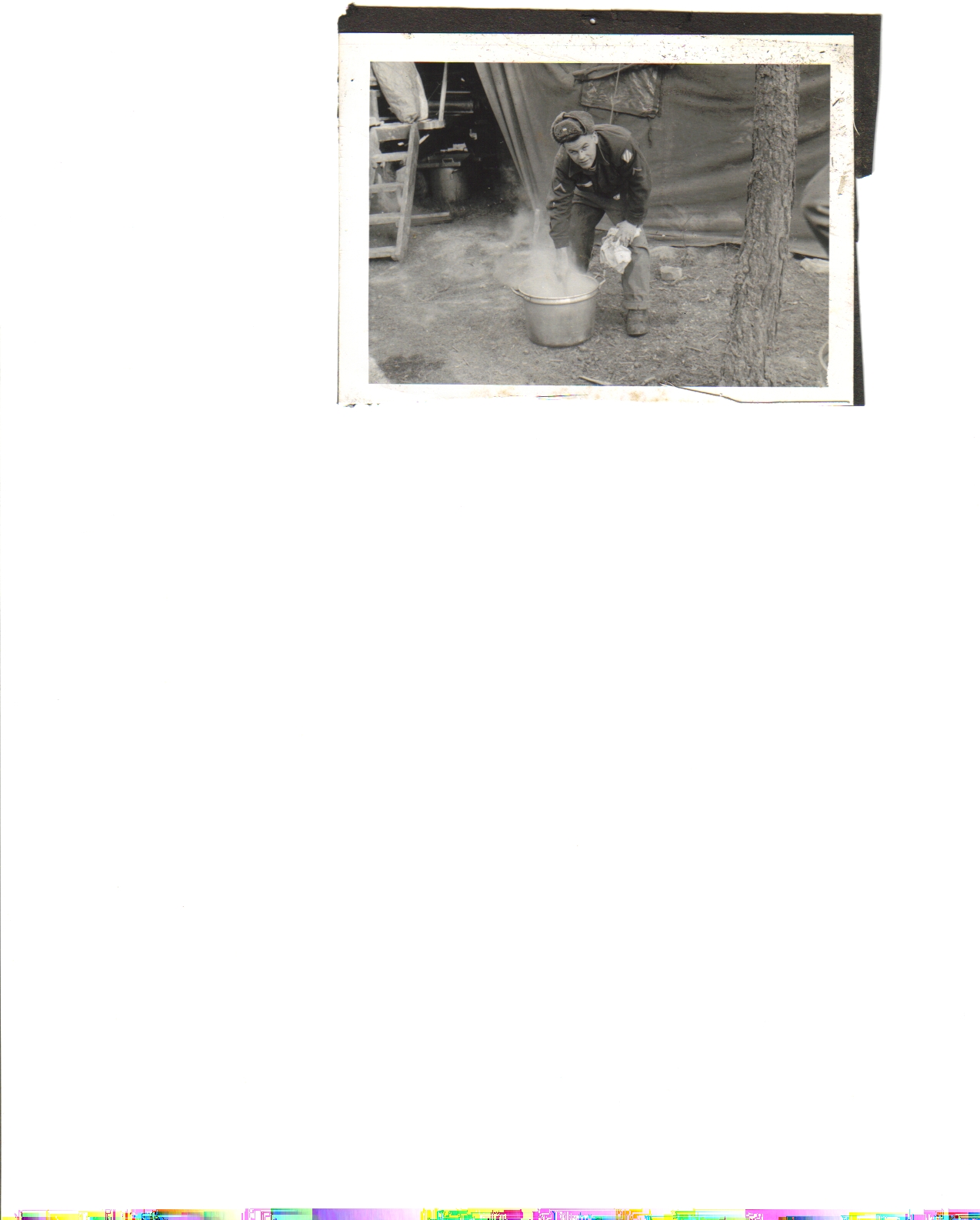
On October 10, 1957, a letter arrived for my father, Laurence M. Davis, then an eighteen-year-old from Everett, Massachusetts. The contents of that letter changed his life--it was an induction notice from the United States Army. He had been drafted. Soon thereafter, he arrived in Fort Benning, Georgia, to begin basic training. For a kid who had never travelled much, mostly to the summer home of his parents in Hampton Beach, New Hampshire, the heat, snakes and southern accents of his fellow soldiers were a far cry from his staid New England surroundings.

In his own recollection years later, his time in the army changed him into a man. His stories from that time were filled with a mixture of laughter, excitement and dread that mark the life of a soldier. He once told me that he was so homesick at Fort Benning that he often “cried into his pillow at night.” The challenge of being away from home was tempered by the many friendships he made during basic training. He met men from Appalachia who could not read; overweight men from privileged families who found boot camp hell on earth; and men who earned medals fighting in World War II and Korea. He attended cooks and bakers school and began a lifetime interest in cooking (although as a kid me and my brother were subjected to large quantities of spam and knockwurst, our own boot camp to muddle through).
Private Davis was part of the vaunted Third Division and he found himself in a mortar battery. He was stationed in West Germany during the “Berlin Conflict,” when the Soviets built the Berlin Wall and a war seemed a possibility at the time. He told me about the ways average Germans sought to escape from the East by climbing the barbed wire fence to the West or by pole-vaulting over it or digging tunnels under it. It was in West Germany that he met Elvis Presley and would insist to me that the King of Rock ‘n Roll was a dedicated soldier who received no special treatment (the army allowed Elvis to sing in the mess hall on Sunday mornings—quite a sight to see, my father mused quite often).

It was in the army, far from the discipline of my grandparents’ house, that he began to experience the freedom to make decisions for himself. He smoked and drank and raised hell, a common pastime for most soldiers. Once, on a weekend pass, he and two of his buddies decided to take in the local taverns and drink German beer. They bought lederhosen and tried to blend in with the locals. After quite a few stops, they found themselves in the middle of a dense forest. One of his friends spotted an inn and they quickly made their way inside and entered the bar. The customers stopped their conversations and stared at them while the bartender poured their drinks without saying a word. As they sipped their beer, my father turned around to see a roaring fire and, hanging above the mantelpiece, a life-size portrait of Adolf Hitler. They quickly finished their beers and left the inn, making their way back to base. Unfortunately, they missed roll call and my father lost a stripe—he was busted from sergeant to corporal, but came face-to-face with the legacy of World War II in that small German village.

In the army he travelled to France, Belgium, Britain and throughout West Germany. He also travelled to Turkey as part of an honor guard (when he met my wife years later, he made her blush by bragging that he ate a certain part of a bull, a Turkish delicacy, which will remain nameless). This was heady stuff for a young man who had never travelled extensively. He became an expert on the parts of Europe that only a young soldier can appreciate. When I visited France for the first time he told me to visit the Pigalle. When I told him that it was the red light district of Paris, he replied that it was the best part of the city and that I shouldn’t miss it. To a twenty-year-old, I guess the Pigalle had everything else beat.

The army was an important part of his life, and he could hardly contain his pride. He had a self-deprecating sense of humor and joked that peacetime soldiers such as he were “drugstore soldiers,” meaning those who could show off their uniforms at the soda fountain without fear of going off to war. His family was full of war veterans—his great uncle served in World War I, his three uncles in World War II and his brother and brother-in-law in Vietnam. When he died in January 2008 I was comforted to know that he would be eligible for a military funeral and a military marker. It got me thinking of the countless numbers of men and women who serve in the armed forces, some who fight in wars and most, like my father, who serve their country in peacetime without much notice. Veteran’s Day is the ideal time to recognize all who serve or have served this country.